Think Positive Always
Burnout and Anxiety: How to Calm Your Nervous System at Work
Burnout and anxiety often travel together, especially when work feels nonstop. This guide shares practical, work-friendly ways to calm your nervous system in the moment, reduce mental load, and protect your energy without needing a perfect lifestyle.

There’s a specific kind of anxiety that shows up at work.
It’s not always a full panic. Sometimes it’s quieter than that. Your chest feels tight. Your thoughts speed up. Your body feels like it’s bracing for something. You keep checking your inbox, even when you know it won’t help. You reread the same message three times. You’re “fine,” but you’re not calm.
And when burnout is already in the picture, anxiety can feel even louder, because your system is tired and has less room to cope.
I want you to know something first: **this is not you being dramatic.** This is your nervous system doing its job, trying to keep you safe in a season that feels too heavy.
Burnout is recognized in the ICD-11 as an occupational phenomenon tied to chronic workplace stress that has not been successfully managed. ([World Health Organization](https://www.who.int/standards/classifications/frequently-asked-questions/burn-out-an-occupational-phenomenon)) And workplace burnout is commonly described as involving exhaustion, mental distance or cynicism, and reduced professional efficacy. ([American Psychological Association](https://dictionary.apa.org/burnout))
So if your body is reacting, it makes sense.
If you’re in the middle of burnout right now, start here too: [How to recover from burnout without quitting your job](https://thinkpositivealways.com/articles/recover-from-burnout-without-quitting)
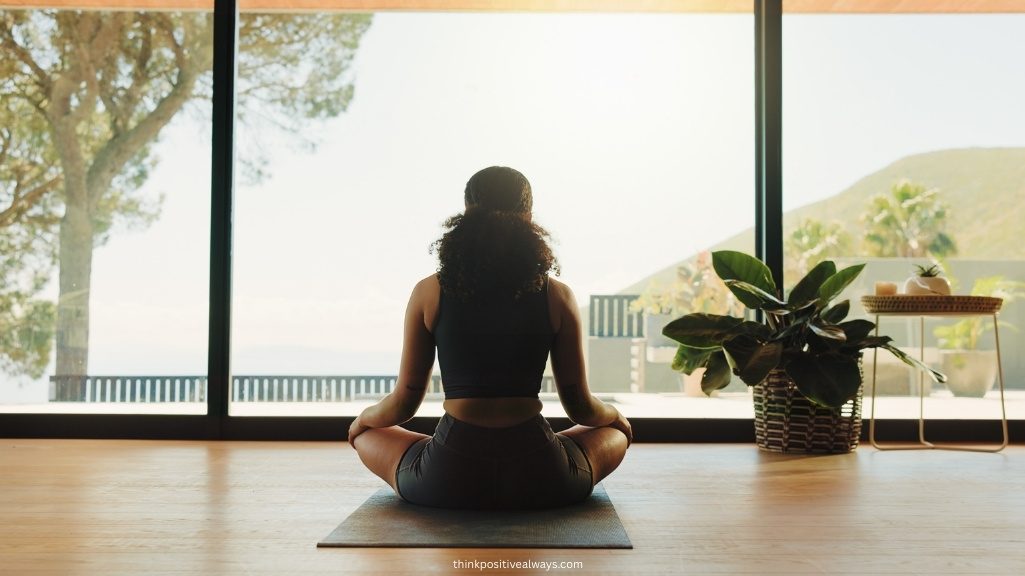
Burnout and anxiety, why they often show up together
Burnout drains your energy. Anxiety drains your peace.
When you’re burned out, your body has been in stress mode for too long. So even when nothing “bad” is happening in the moment, your system can stay on high alert.
You might notice:
racing thoughts during simple tasks tight chest or shallow breathing irritability, tears close to the surface, or numbness feeling behind before the day even starts trouble switching off after work doom-scrolling, snacking, or constant checking as comfort habits
“When your body has been carrying too much for too long, calm feels unfamiliar, not impossible.”
Tip: If your mind keeps working after hours, that’s a common burnout-anxiety loop. This helps: How to stop working in your head after hours
A gentle note before we start
This article is educational and supportive, not medical advice. If anxiety feels severe, scary, or unmanageable, or you’re experiencing panic attacks, it’s okay to seek professional support. You deserve care that fits you.
Now let’s talk about practical things you can do during a normal workday.
Step 1: Calm your body first, then solve the problem
When anxiety rises, your brain wants answers. But your body wants safety.
So we start with the body, because calming the nervous system makes thinking easier.
Breathing practices can reduce stress and anxiety, in part by supporting parasympathetic activity that counterbalances stress responses. (PMC)
Here are work-friendly options that do not look strange in a meeting, at your desk, or in the washroom.
Option A: The 60-second exhale reset
Inhale gently through your nose for 3 seconds Exhale slowly through your mouth for 6 seconds * Repeat 5 times
Longer exhales can signal your body to downshift.
Tip: Do this before you open your inbox in the morning. It changes the tone of the whole day.
Option B: The “cyclic sigh” style reset (5 minutes)
Stanford Medicine reported research showing that five minutes a day of certain breathing exercises can reduce anxiety and improve mood. (Stanford Medicine)
Try this:
Inhale through your nose Take a second short inhale on top of it Exhale slowly and fully Repeat for a few minutes
If you prefer something simpler, do slow breathing with a longer exhale. Consistency matters more than the exact method.

Step 2: Use a grounding routine when thoughts spiral
When anxiety is high, your mind time-travels. It goes to worst-case scenarios fast.
Grounding brings you back to right now.
The 5-4-3-2-1 grounding (quiet version)
In your head, name:
5 things you can see 4 things you can feel 3 things you can hear 2 things you can smell * 1 thing you can taste
This pulls your brain out of the spiral and back into the room you’re actually in.
“You don’t have to solve your whole life today. You just have to return to this moment.”
Step 3: Shrink the task until your nervous system agrees
Anxiety grows when a task feels too big and undefined.
So we shrink it.
Instead of: “I need to finish this report.” Try: “I will open the document and write the first heading.”
Instead of: “I have too much to do.” Try: “I will pick the next right task and do 10 minutes.”
This works because your nervous system trusts small steps.
italics: The next small step is a form of safety. bold: Small steps interrupt panic.
If you need a realistic planning method for this, use: Time blocking for real life: a simple schedule that breathes
Step 4: Reduce mental load with a “worry capture” note
When your mind keeps repeating worries, it’s often trying not to forget them.
So you give it a safe place to store them.
Open a note and write:
What I’m worried about What I can do today What can wait until tomorrow Who I can ask for clarity
Then choose one action.
This is also one reason psychological detachment matters, because learning to mentally “switch off” from work supports recovery and wellbeing. (PMC)
Tip: At the end of the workday, write a “tomorrow list” so your brain stops trying to hold everything overnight: The 15-minute after-work reset that saves your evenings
Step 5: Add micro breaks that interrupt stress before it piles up
Micro breaks are tiny pauses that prevent your nervous system from staying in constant activation.
Choose two or three a day:
stand up and stretch for 60 seconds step outside for fresh air for 2 minutes drink water away from your desk relax your jaw and drop your shoulders * walk to the washroom slowly instead of rushing
If you want a simple routine you can follow without thinking, use: Micro breaks at work: tiny habits that prevent burnout

Step 6: Set one boundary that lowers anxiety instantly
Anxiety often rises when work has no edges.
So we create edges.
Choose one boundary this week:
no replying instantly unless truly urgent one hour a day with notifications off no work messages after a set time fewer meetings on one chosen day * a clear shutdown routine at the end of the day
If you need words that feel polite and professional, use: Boundary scripts for work: polite ways to say no without guilt
“A boundary is not a fight. It’s a fence around your peace.”
Step 7: If the workload is toxic, treat anxiety as a signal
Sometimes anxiety is not random. It’s information.
If your workload is unrealistic, constantly urgent, or punishes rest, anxiety can be your body saying: this is not safe.
In that case, you need strategy, not just coping.
Start here: How to handle a toxic workload without quitting immediately
And if you want a calmer weekly rhythm that prevents Sunday dread, this helps: Sunday reset for professionals: prepare for the week calmly
A simple “calm plan” you can keep in your notes
If you want something you can use fast, save this:
When I feel anxious at work
Breathe: 3 seconds in, 6 seconds out, five times Ground: 5-4-3-2-1 in my head Shrink: choose the next 10-minute step Capture: write worries and one action Break: take a 2-minute walk or water break Boundary: delay response, ask for priorities, or pause notifications